

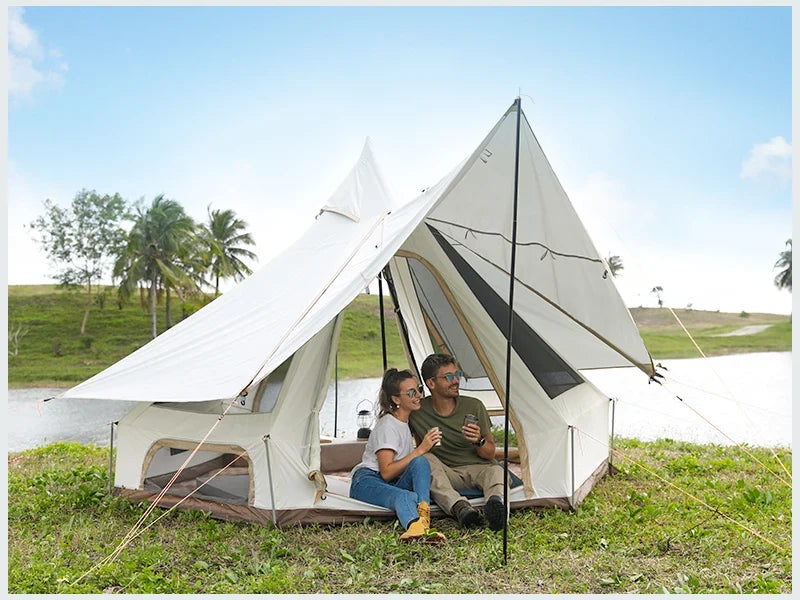
A three person tent can mean three close-fitting sleeping pads on a trail, or a comfortable campground shelter for two people and their gear. Those are different purchases. This guide helps you measure the space three campers actually need, choose between backpacking and car-camping designs, and decide when KingCamp's ANIZO S 320 makes sense.
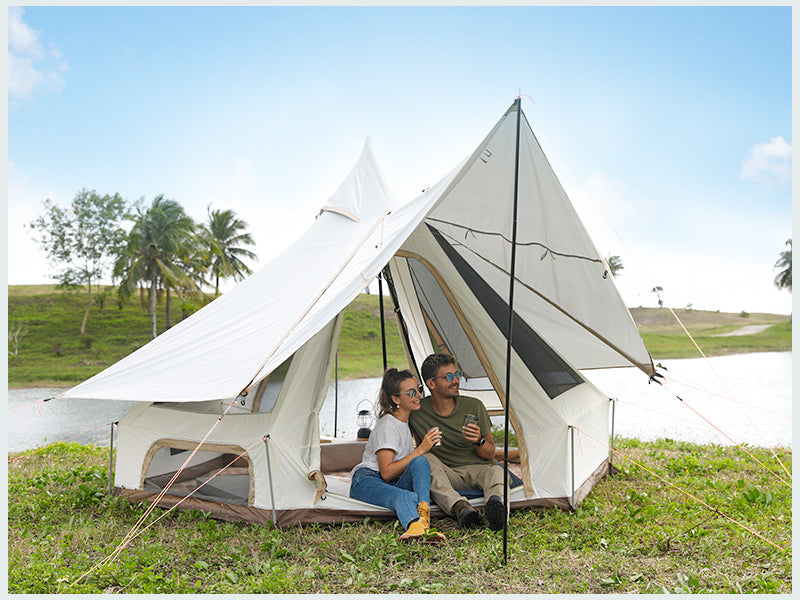
Quick Answer: Which Three-Person Setup Should You Buy?
- Three people hiking overnight: Shop a purpose-built 3P backpacking tent. Compare complete packed weight, actual inner-floor dimensions, two-door access, and rainfly coverage. The ANIZO is too heavy for this role.
- Three people at a drive-up campsite: KingCamp ANIZO S 320 is rated for two to four and offers a tall teepee profile. Confirm the inner room fits your three beds before purchase.
- Two people who want room for gear: A three-person sleeping floor can be a useful comfort upgrade, but verify whether the extra width is in the inner room rather than an outer canopy.
- Three adults with wide air beds or a dog: Consider a larger campground tent; a capacity label alone does not establish a comfortable fit.
This is a specification-based buying guide. We have not independently pitched, slept in, or weather-tested the tents discussed here.
What Does “Three Person Tent” Capacity Really Mean?
The number describes a manufacturer's intended sleeping capacity. It does not promise three full-size air mattresses, room to stand, dry storage for three packs, or equal access to a door. A tightly packed three-person backpacking tent can be a perfectly rational choice when carried weight matters. The same sleeping arrangement may feel cramped during a rainy family weekend.
First decide who the third occupant is. Three adults on 20-inch pads, two adults and a child, and two adults plus a dog have different demands on the floor. A dog also needs an appropriate sleeping area; do not assume an animal can use a vestibule safely or stay dry there. If all three adults use wide pads, ask for a dimensioned floor plan rather than relying on a capacity icon.
Accept a close fit in exchange for a lighter shared load.
Look for usable inner width, not just a large fly or awning.
Prioritize bed fit, entry, headroom, and wet-weather storage.
Will Three Sleeping Pads or Air Mattresses Actually Fit?
Do the width calculation before choosing a tent. Three standard 20-inch pads require 60 inches side by side; three 25-inch pads require 75 inches. These are bare arithmetic totals, with no room for a tapered floor, sloped walls, a center pole, a bag, or the space needed to reach a door. At the shoulders, the usable width can be less than the widest number shown in a footprint diagram.
Also check length. A nominal 78-inch pad in a nominal 80-inch tent leaves almost no tolerance for a sloping wall or a bulky footbox. Draw the inner sleeping room to scale and place all three beds inside it. Then mark doors, any pole, and a route to the exit. For a teepee, request the inner-tent floor dimensions specifically: the outer canopy's square footprint is not a mattress-fit specification.
| Bedding plan | Minimum combined width | What the number misses |
|---|---|---|
| Three 20-in pads | 60 in | Door access, wall slope, gear, and movement |
| Two 25-in pads + one 20-in pad | 70 in | Whether the floor tapers toward feet or door |
| Three 25-in pads | 75 in | Clearance between sleepers and usable inner width |
Examples use hypothetical pad widths, not a guarantee of fit in any named tent. Measure your own pads and compare with the current manufacturer's inner-floor diagram.
Backpacking or Car Camping: Why the Same Capacity Needs Different Gear
For a backpacking trip, the tent travels every mile. Compare a full kit that includes the fly, inner, poles, stakes, guylines, and any required footprint. “Minimum trail weight” can omit pieces you will actually carry. Divide the complete carried weight among the three people sharing it, but also check packed length: poles that will not fit inside a pack may be awkward even when the weight looks reasonable.
At a drive-up campground, the tent may be carried only a short distance. A taller shelter, larger bag, and more generous canopy can be worthwhile if three people will change clothes inside or spend wet hours at camp. That is where ANIZO S 320 belongs. KingCamp lists it at 19.84 pounds and 26.7 inches packed, so it should not be presented as an ultralight or ordinary backpacking option.
The search results for three-person tents mix trail roundups and general buying guides. A single “best” claim is therefore less useful than matching the design to the trip: low carried weight for hiking, usable sleeping width and living space for campsite use. For a truly trail-focused purchase, compare current 3P backpacking models on their official product pages; KingCamp's ANIZO should be evaluated separately as a car-camping tent.
Is KingCamp ANIZO S 320 a Good Tent for Three Campers?
It can be, when the trip is vehicle-supported and the inner room fits the group's bedding. KingCamp lists the ANIZO S 320 for two to four people, with a 125 × 125 × 90-inch overall tent dimension, a 19.84-pound listed weight, and a separate inner and outer. The outer can be extended to create a shaded entry or gear area. Those features make the tent more appealing for a settled campsite than for a long carry.
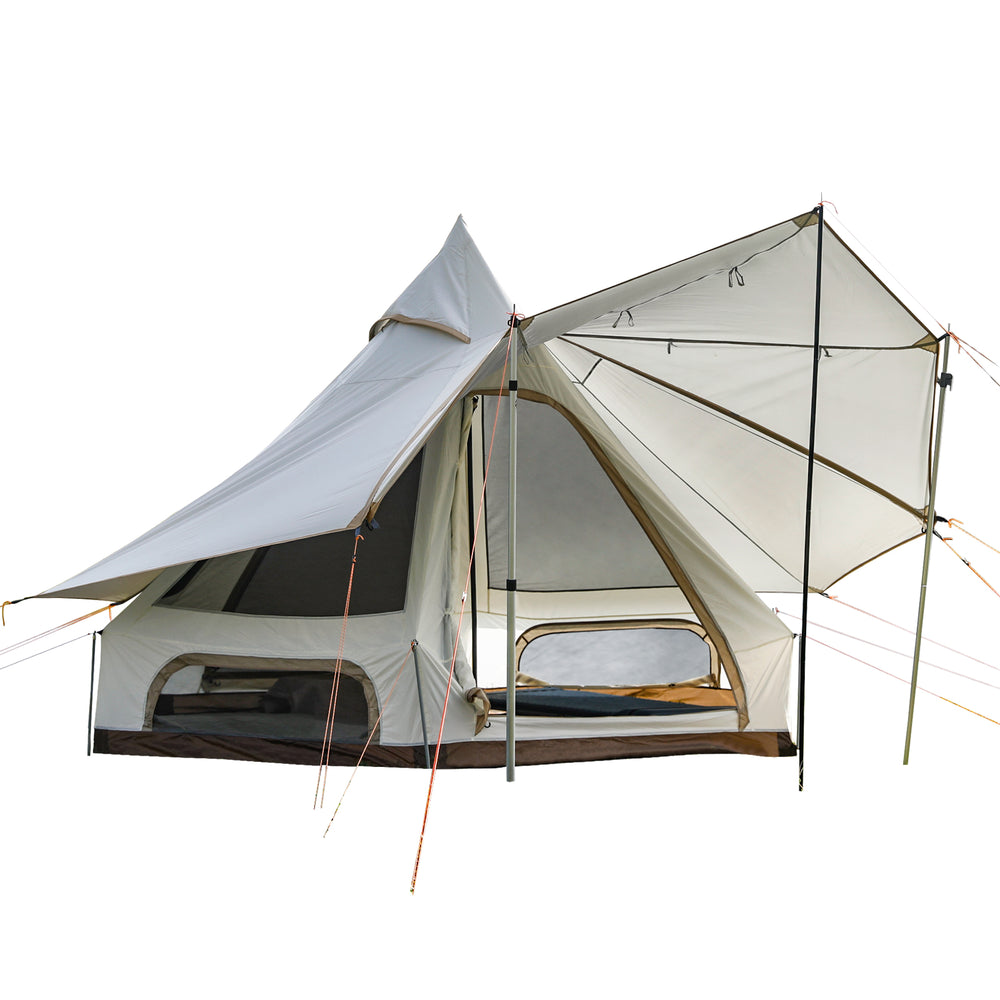
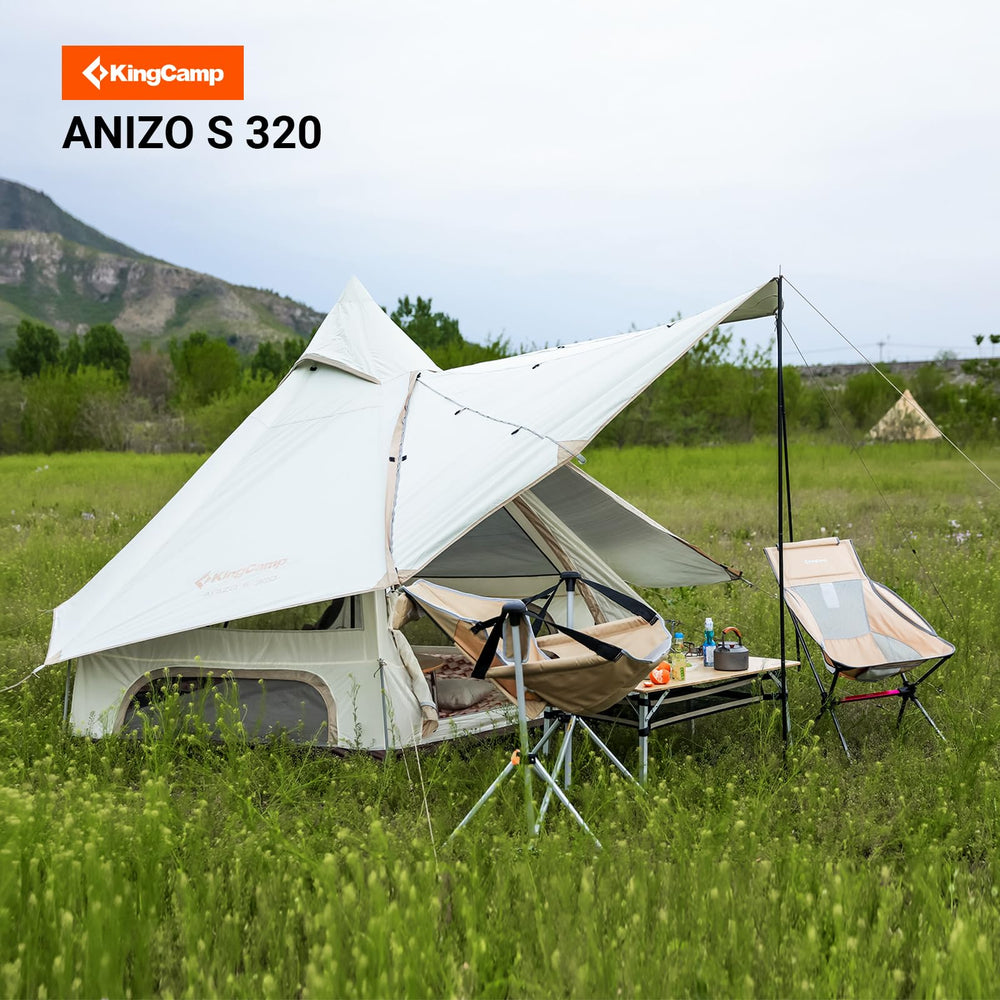
For two adults and one child on relatively narrow pads, the published two-to-four-person rating makes ANIZO a sensible model to examine. For three adults with wide pads, there is not enough information in the outer 125-inch square alone to promise fit. The inner may be smaller, and the usable shape matters. Ask KingCamp for inner-floor measurements or a scaled layout before ordering; confirm the exact variant, included inner, and current stock on the product page.
The separate inner and outer also affect the experience. Inner-only pitching may suit a clear, warm night, while the full weather setup needs both layers and correct tension. The outer canopy can shelter shoes and camp tasks, but it is not another sleeping room. Three people should still test their planned pad layout against the enclosed inner.
Choose it for: A three-person drive-up trip where teepee headroom and flexible shade matter. Choose something else for: Multi-mile backpacking, or any bedding layout that cannot be confirmed against the inner room.
Check ANIZO S 320 dimensionsShould Three Campers Buy a 3P or 4P Tent?
Choose a true 3P shelter when the three beds fit, the group accepts limited personal space, and carried or packed weight matters. Size up to 4P when the group wants wide pads, interior gear space, an easier exit route, or more room during rain. The larger rating is not a universal upgrade: it can mean a larger campsite footprint, more stakes, more drying space at home, and extra weight on a trail.
A campground family of three may find the ANIZO's two-to-four rating appropriate, provided the inner room checks out. A backpacking group of three should compare 3P and 4P trail models by weight per sleeper and usable area per sleeper, not just by the person count printed on the label. For a larger vehicle-camping layout, see KingCamp's four-person tent guide; do not assume a larger tent is automatically suitable for backpacking.
Which Doors, Vestibules, and Tent Shape Matter for Three People?
Three occupants generate more nighttime traffic than one or two. Two well-positioned doors can reduce the need to climb over another sleeper. A single doorway can still work, but sketch the bed orientation and ask who will be blocked from the exit. Check how the door opens under the rainfly and whether entering in rain drips onto bedding.
A vestibule is useful for boots and wet packs, but it is not waterproof interior floor area. Compare vestibule coverage with actual gear sizes and keep the exits unobstructed. In a dome, wall slope may steal usable shoulder space near the edges. In a teepee, height concentrates toward the center and a central support or shaped inner can influence where pads fit. Neither profile is intrinsically better; the scaled inner-floor layout and door placement decide.
How Should Three Sleepers Evaluate Rain Protection and Condensation?
Look beyond a single waterproof-coating number. A dry night depends on fly coverage, seam construction, floor edges, drainage at the pitch, door protection, and properly tensioned guylines. Site choice matters: avoid low spots where rain collects. In wind, leave enough clearance between fly and inner as the manufacturer instructs.
Three breathing sleepers and damp clothing can add condensation inside a closed shelter. Look for vents that can remain open during rain, mesh that promotes airflow, and a layout that keeps bedding away from wet walls. KingCamp describes a ventilated inner and a top vent on ANIZO's outer. These are design details, not proof that the tent will stay condensation-free in every climate. Dry the tent thoroughly after a wet trip before storage.
What Should You Check About Pitching and Packing Before Checkout?
Check the full pitched area, including canopy, guylines, and safe access around the tent. A 125-inch exterior does not mean a 125-inch campsite pad is enough once stakes and lines are deployed. If using the ANIZO's extended canopy, plan for more ground space and confirm what poles or supports are included in the selected package.
Practice a new pitch before the trip, especially if you will arrive after dark. Count the poles, stakes, ropes, inner, outer, and carry bags when unpacking. For trail tents, confirm whether the published weight includes the components you need; for car tents, confirm the packed bag fits alongside everyone else's gear in the vehicle. The ANIZO's listed 26.7-inch packed length is a practical transport check even if its 19.84-pound weight is acceptable.
Three-Person Tent Buying Checklist
- List the real sleepers and beds. Record each pad's width and length; include a dog or child as an actual occupant, not an afterthought.
- Get the usable inner-floor plan. Check taper, wall slope, pole placement, door path, and whether the quoted dimensions describe the inner or outer.
- Decide the trip type. For backpacking compare full carried kits; for a campground compare comfort, setup space, and transport.
- Inspect wet-weather living. Check fly coverage, door protection, vestibule size, vents, and where wet gear can go.
- Verify the exact product. Recheck the current variant, included parts, stock, shipping, and return terms before checkout.
Three Person Tent FAQ
Can three adults sleep in a three person tent?
Yes, if their bedding fits the usable inner floor and they accept a close arrangement. Three wide pads may not fit a floor intended for narrow pads, and a capacity label does not reserve space for bags.
Is a three person tent comfortable for two people?
Often, because the third sleeping place can become room for clothes or movement. Verify that the extra area is inside the sleeping compartment, not only under the outer fly.
How wide should a tent be for three sleeping pads?
Three 20-inch pads total 60 inches; three 25-inch pads total 75 inches. Add clearance for wall slope, a usable exit, and your actual gear. Measure the inner rather than the outside footprint.
Is ANIZO S 320 a three person backpacking tent?
No. KingCamp lists it for two to four campers at 19.84 pounds. It is a car-camping or short-carry tent that may suit three sleepers once the inner layout is verified.
Should three people buy a four person tent?
Consider it for drive-up camping with wide beds or bulky gear. For backpacking, compare the added space with the complete extra weight and packed size before sizing up.
Bottom line: Buy a three person tent around your actual beds and trip, not a number on the bag. For backpacking, prioritize a genuine 3P trail shelter with a verified full-kit weight. For vehicle-supported camping, KingCamp ANIZO S 320 is the relevant KingCamp starting point for three; verify its inner floor before you commit.
Share:
Four Person Tent Size Guide: Find the Right Fit for Four
Foldable Camping Stove Guide: Choose the Right Setup for Cooking