

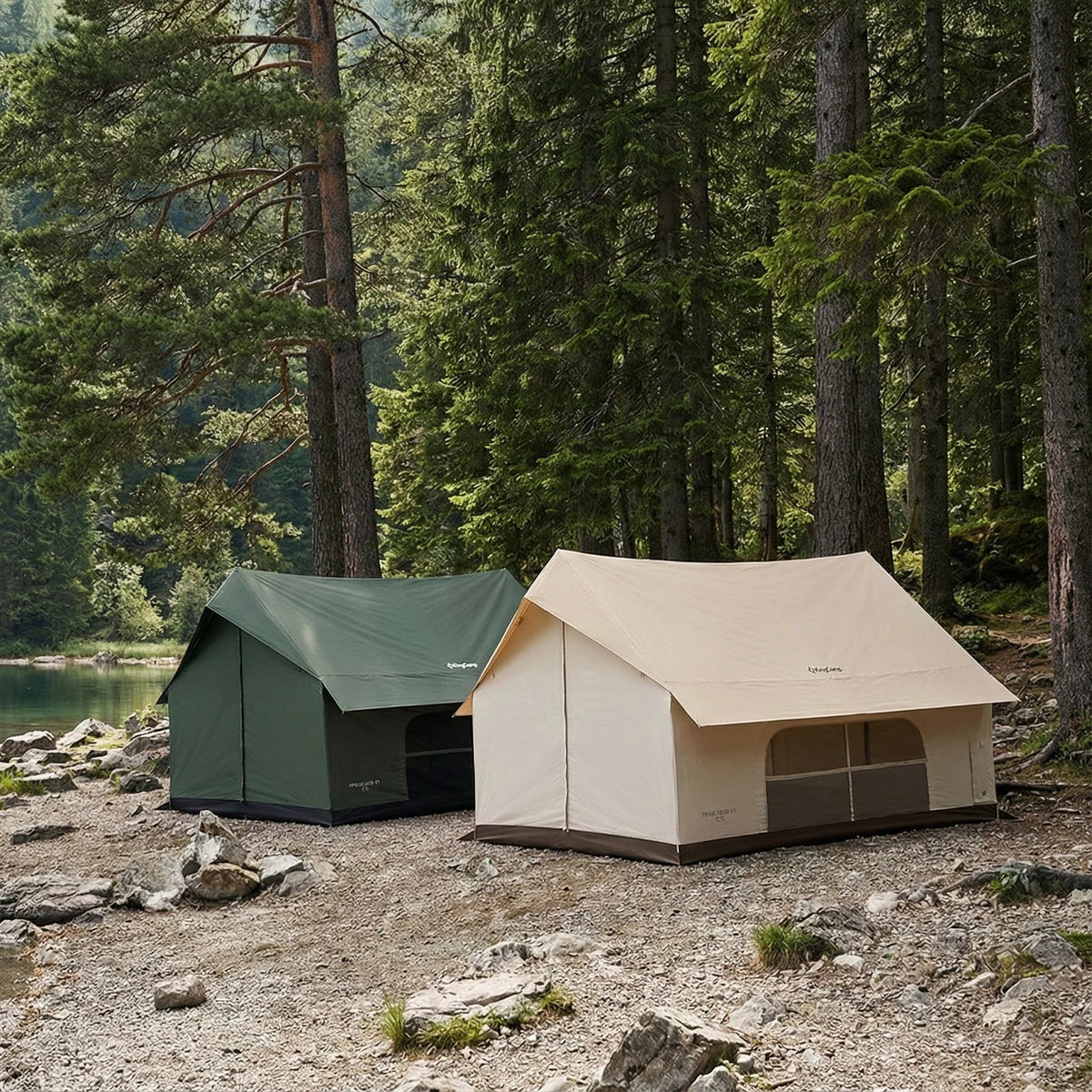
TL;DR
After stove use, inspect the chimney exit, nearby fabric, floor protection and moisture-prone areas before packing; KingCamp KHAN 340GSM KT2551 uses 340 g/m² TC canvas, an integrated stove jack and a 510 g/m² PVC mesh ground mat, KHAN VILLA has an adjustable chimney opening and central stove-mat opening, and KHAN PALACE has a chimney vent and zippered groundsheet cutout.
Record soot, discoloration, stiffness, melting, holes, dampness and loose seams by location. Dry the tent fully, clean the cooled stove and flue according to their manuals, and do not use a damaged stove setup again until the affected components have been assessed and repaired or replaced.
A stove-ready tent needs two kinds of after-trip care. The stove and chimney can collect ash and creosote. The tent can retain moisture, smoke residue and damage around the pipe opening or floor. A quick visual check while packing helps, but a second check when everything is cool, dry and well lit is more useful for deciding what needs attention before the next trip.
The inspection route follows the stove installation: on KT2551, start at its integrated stove jack, nearby 340 g/m² TC canvas and 510 g/m² PVC mesh ground mat; on VILLA, add the adjustable sleeve and center floor opening; on PALACE, examine the chimney vent and every edge of the zippered floor cutout. These are model-specific inspection locations drawn from the published designs, not a claim that any one product has been field tested for smoke or heat damage.

What maintenance prevents mold, smoke buildup, and fabric damage in a stove-ready tent?
Drying, gentle material-specific cleaning and a complete stove-path inspection are the core habits; KT2551's 340 g/m² TC shell, VILLA's 210 g/m² TC outer and PALACE's 210 g TC shell all need to be fully dry before storage, while their stove openings need a separate heat and soot check. KingCamp describes a 30-minute comparison in which its 340 g/m² fabric retained heat better than a 210 g/m² fabric using the same stove. That is a manufacturer demonstration, not a universal temperature guarantee or evidence that ventilation and stove clearances can be relaxed.
After the stove has gone out and every component is cool, remove loose ash from the stove, inspect and clean the flue and spark arrestor according to the stove maker's instructions, and keep soot-covered metal separate from tent fabric. Before packing the shelter, brush off dry debris, wipe suitable surfaces gently and dry the tent body, floor, seams, guy lines and protective mat completely. If the tent must travel home damp, unpack and dry it as soon as practical.
Persistent indoor smoke is a reason to stop stove use and find the cause. Check the chimney, spark arrestor, pipe joints and ventilation under the stove manual's procedure. A carbon monoxide alarm is an additional warning device, not a substitute for correct installation or ventilation.
The five-minute inspection before the tent comes down
Inspect while the stove is cold and the tent is still pitched: KT2551's integrated jack, VILLA's adjustable sleeve and PALACE's chimney vent are easier to see before fabric is folded and soot can transfer to clean panels.
- Confirm the fire is out and all stove and pipe parts have cooled under the stove manufacturer's instructions.
- Photograph the jack or vent, the fabric immediately around it, nearby seams and the pipe route.
- Look for new brown or black marks, pinholes, softened coating, melted mesh, brittle patches or stitching that has pulled away.
- Inspect the floor protector and the tent floor beneath or beside it for scorch marks, melted coating or trapped dampness.
- Check ceiling and upper wall areas for soot streaks that may indicate repeated smoke spillage or a flue problem.
- Open the stove-area floor arrangement fully, where applicable, and inspect zippers, edges and contact points before folding them closed.
A dark mark alone does not identify its cause. Record what changed since the previous trip, whether the surface feels different and whether the mark sits close to a heat source. Do not scrub away evidence of suspected scorching before photographing it.
Model-by-model heat and smoke inspection points
The inspection points change with the stove layout: KT2551 pairs an integrated jack with a 510 g/m² PVC mesh ground mat, VILLA pairs an adjustable jack with a central stove-mat opening, and PALACE uses a center groundsheet cutout with a zipper. Do not treat KT2551's ground mat as a fireproof hearth; use the floor protection and clearances required by the stove and tent instructions.
| KingCamp model and published design | Inspect after stove use | Record before cleaning or storage |
|---|---|---|
|
KHAN 340GSM KT2551 Integrated stove jack; 340 g/m² TC canvas; 510 g/m² PVC mesh ground mat; 500 x 500 x 300 cm 8–10-person variant |
Jack edge, canvas near the pipe route, ground mat around the stove position and any separate hearth protector | New soot outline, discoloration, punctures, hardened fabric, damaged mat or ember marks |
|
KHAN VILLA Adjustable chimney sleeve; central stove-mat opening; 210 g/m² TC outer; 210D Oxford floor |
Sleeve and surrounding stitches, pipe contact area, center floor opening, floor edges and nearby gear | Sleeve deformation, soot trail, loose stitching, scorched floor edge or moisture under the mat |
|
KHAN PALACE Chimney vent; zippered central groundsheet cutout; 210 g TC shell; 210D Oxford groundsheet |
Vent and surrounding shell, cutout perimeter, zipper teeth and tape, exposed ground and adjacent floor | Heat marks, trapped ash in zipper, damaged floor edge, soot transfer or wet ground contacting fabric |
A stove jack, fire-resistant mat or floor cutout addresses only part of the installation. None makes other tent fabric, furniture or bedding heatproof. Follow the exact tent and stove manuals for the complete assembled setup.
What the 340 GSM TC canvas changes—and what it does not
KingCamp's KT2551 uses 340 g/m² TC canvas, and its product page describes a 30-minute side-by-side test in which the heavier 340 g/m² fabric retained heat better than 210 g/m² TC fabric with the same wood stove. That supports a comparative insulation claim under the demonstrated conditions. It does not publish a universal indoor temperature, a safe stove temperature, or a guarantee for every wind, ground and ventilation arrangement.
The thicker KT2551 shell also deserves a deliberate drying and inspection routine: examine the 340 g/m² canvas near the chimney exit, then separate and dry the 510 g/m² PVC mesh mat and carry bag. Better heat retention does not make TC canvas noncombustible. Keep the stove, pipe, bedding and any floor protection at the clearances required by their manufacturers, maintain ventilation, and stop use if the jack, fabric or ground mat shows heat damage.
Smoke stain, mold or heat damage: how to tell what to record
Location and texture help separate problems: a dry soot film near KT2551's jack, VILLA's sleeve or PALACE's vent points to a smoke-path check, while damp spotting along a folded floor seam calls for drying and a mold assessment.
| What you notice | Likely inspection path | Action before next stove use |
|---|---|---|
| Loose gray or black deposit near pipe exit | Check flue, spark arrestor, joints and smoke spillage; photograph the deposit | Resolve the smoke source and clean by the material and stove instructions |
| Brown mark, brittle fabric, hole or melted coating | Check heat exposure, clearances and adjacent components | Stop stove use until damage and installation are assessed; replace or repair as directed |
| Musty odor or new spotting after storage | Check wet folds, floor underside, seams, mat and guy lines | Unpack, dry fully and obtain fabric-specific cleaning guidance |
| Sticky film or coating that peels | Check coating condition and moisture exposure | Seek model-specific repair advice; do not hide it with a general waterproofing spray |
A photograph cannot identify every stain. Record the date, exact location, whether the surface was wet, and whether the mark changed after a gentle dry wipe. If heat damage is possible, treat the area as compromised until confirmed otherwise.
Dry the whole shelter, including hidden layers
Dryness must include the ground mat, any separate hearth protector, seams and guy lines: KT2551's 510 g/m² PVC mesh mat, VILLA's detachable dustproof mat and PALACE's zippered groundsheet create different places for moisture to remain after the visible roof feels dry.
At home, pitch or spread the tent in a shaded, ventilated place. Separate removable layers, inspect both sides of the ground mat and any separate hearth protector, and open the stove-area floor arrangement where the model provides one. Turn or lift the floor so trapped moisture can escape. Let ropes and carry bags dry as well. Pack only when each layer is dry to the touch and no damp folds remain.
If weather forces damp transport, treat the packed bag as temporary transport, not storage. Unpack as soon as practical. A third-party canvas-care guide suggests drying within 24 hours after a wet pack, but KingCamp's current KT2551, VILLA and PALACE pages do not publish a shared 24-hour warranty or care rule.
Clean soot without damaging the fabric treatment
Start with the least aggressive method compatible with the material: KT2551 has a heavier 340 g/m² TC shell and PVC mesh mat, while VILLA and PALACE pair lighter TC shells with coated Oxford floors, so one cleaner should not be assumed suitable for every panel. The heavier canvas may retain heat better in the manufacturer's comparison, but it still requires complete drying before storage.
Remove dry grit with a soft brush or cloth. Spot clean only after checking the current KingCamp care instructions for the affected fabric and finish. Avoid bleach, abrasive scrubbing, pressure washing and unapproved solvents. Do not apply another brand's canvas-cleaning recipe or fire-retardant product to KingCamp fabric without confirmation of compatibility.
If soot has become embedded, a waterproof coating feels tacky, or the original water resistance appears changed, document the issue and ask KingCamp which cleaner or treatment is approved for that exact model and panel. A hydrostatic-head figure describes a listed material test; it does not tell you which aftercare chemical is safe.

Clean the stove, pipe and spark arrestor separately
Tent maintenance does not end at the canvas: a stove paired with KT2551, VILLA or PALACE needs its firebox, pipe and spark arrestor checked and cleaned under that stove's own instructions after the system has fully cooled.
Look for ash left in the firebox, creosote or soot inside the flue, corrosion, loose pipe joints and a blocked spark arrestor. Clean them with tools approved for the stove. Keep ash and soot away from the tent, bedding and bag during disassembly. If the stove repeatedly spills smoke indoors, do not treat a wipe-down as a repair; investigate the installation, draft, fuel and ventilation before relighting.
The generic “daily” or “every 3–6 months” intervals sometimes found in hot-tent guides are not published KingCamp intervals for these three tents. Let actual use, visible buildup and the stove and tent manuals determine service timing.
A simple inspection record for the next trip
A dated record helps reveal change over time: on KT2551 note the stove jack, nearby 340 g/m² TC canvas and PVC mesh mat; on VILLA note the adjustable sleeve and center opening; and on PALACE note the vent and zippered floor cutout. Photograph the same points after each stove trip so new damage is easier to identify.
| Record field | What to enter | Why it matters |
|---|---|---|
| Trip and equipment | Date, tent model/SKU, stove and pipe configuration | Keeps observations tied to the correct setup |
| Exact location | Jack edge, roof panel, floor cutout, mat underside, seam or zipper | Makes repeat photographs comparable |
| Condition | Clean, soot, damp, odor, stain, stiff, melted, torn or loose | Separates ordinary cleaning from possible damage |
| Action and follow-up | Dried, cleaned, referred to manufacturer, repaired or replaced | Prevents an unresolved issue being forgotten |
Example entry: “October 12 | KHAN PALACE | left edge of floor cutout | new dark mark and stiff zipper tape | photographed; stove use paused pending inspection.” The example illustrates record format, not an observed product defect.
When to pause stove use
Do not relight a stove beside unresolved heat damage: a scorched KT2551 jack edge or damaged PVC mesh mat, deformed VILLA jack sleeve or damaged PALACE cutout zipper requires assessment before the same installation is used again.
Pause if fabric or seam strength appears changed, the pipe contacts the jack unexpectedly, smoke enters the living space, a flue component no longer fits tightly, a protective mat is scorched through, or the planned clearances cannot be maintained. Follow the tent and stove manufacturers' instructions for repair, replacement and safe reassembly. Do not patch a heat-exposed stove-jack area with ordinary tape or assume a stain is cosmetic without checking the fabric beneath it.
Frequently asked questions
Can I pack the tent as soon as the stove is out?
No: KT2551's jack and ground mat, VILLA's floor opening and PALACE's cutout should be checked only after the stove and pipe have fully cooled, and every tent layer must be dry before storage. Follow the stove maker's cooling and ash-handling instructions.
Does a soot mark mean the tent is damaged?
Not always: soot near the KT2551, VILLA or PALACE chimney exit may be a removable deposit, but a brittle patch, hole or melted coating suggests material damage. Photograph and inspect before cleaning.
Should I re-waterproof the tent every few months?
The current KT2551, VILLA and PALACE pages do not publish a shared retreatment interval or one approved chemical for all their panels. Inspect performance and get model- and material-specific guidance before treating the fabric.
What if the tent smells smoky after drying?
First check for remaining soot, then inspect the stove's flue and spark arrestor; all three KingCamp tents have stove openings, but persistent smoke odor can reflect a stove or ventilation problem as well as residue on fabric. Resolve the source before the next burn.
Before the next fire
A ready-to-use tent is clean, fully dry and free of unresolved heat damage: KT2551's 340 g/m² TC canvas, jack and ground mat, VILLA's adjustable sleeve and floor opening, and PALACE's vent and cutout should each pass a fresh visual check. Confirm the stove and chimney are clean, correctly assembled and compatible with the tent setup, then follow current operating, ventilation and clearance instructions.
A short inspection record turns a vague “looks fine” into a repeatable decision. It shows where smoke appeared, what dried slowly and whether a heat mark changed. That makes maintenance more precise and helps avoid carrying a problem into the next family trip.
Share:
Can a Family Tent Handle an Exposed Campsite? A Wind-Condition Checklist
When Is a Separate Sleeping Area Worth It for a Family of Four?