

TL;DR
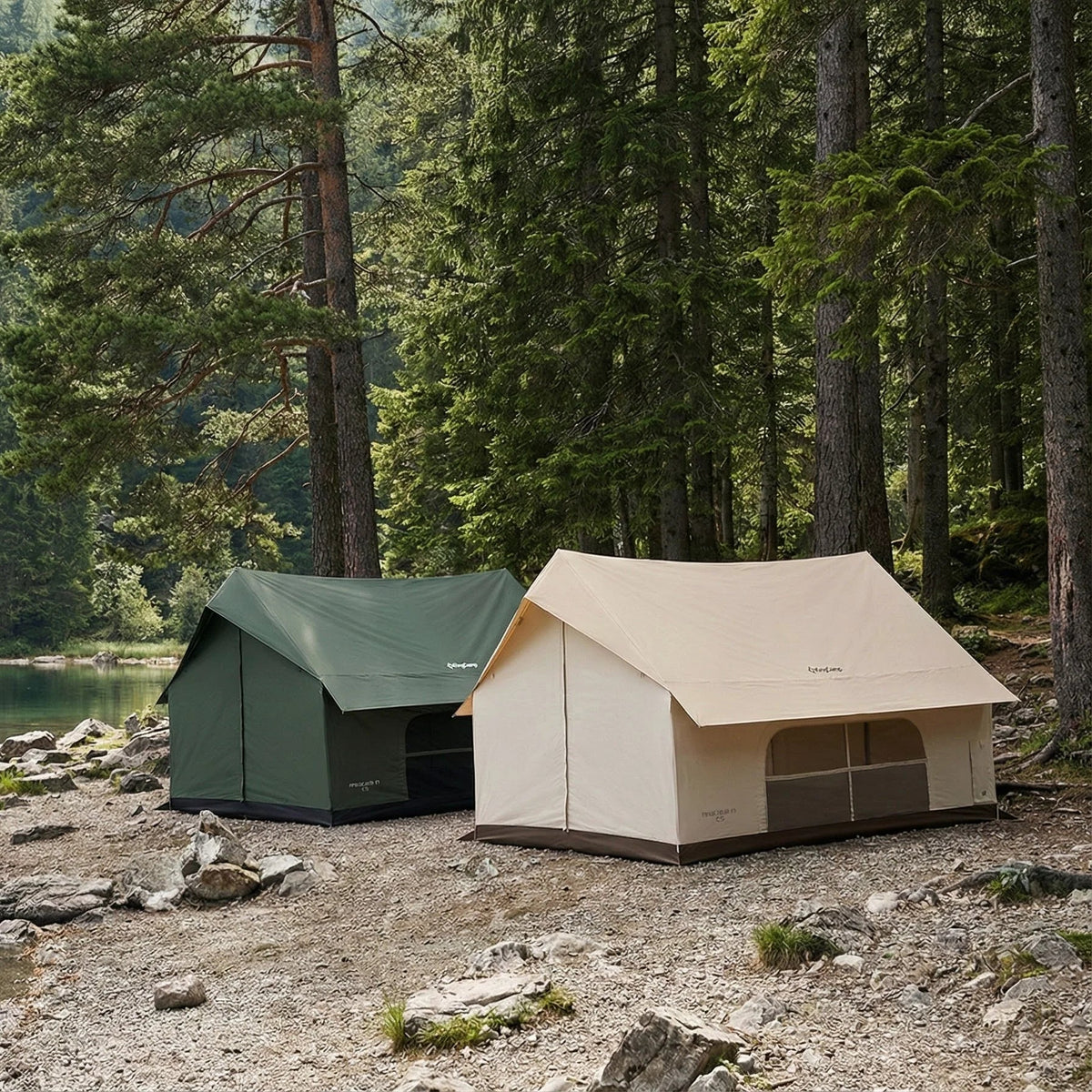
A floor cutout is an opening in the tent floor, a groundsheet or footprint manages ground moisture and abrasion, and a stove mat protects a defined area from sparks or heat only within its stated limits. KingCamp MOUNTAIN IN C5 lists a built-in stove jack and a 74 x 40 cm fire-resistant ground cloth, but its current product page does not document a stove-floor cutout.
KingCamp also sells C5 with the Surefire Size L wood stove as a bundle. That pairing does not replace the need to confirm the current tent and stove manuals, pipe-jack fit, clearances, ventilation and floor-protection instructions for the exact setup. A waterproof layer is not automatically fire protection, and “fire-resistant” is not the same as noncombustible.
Winter stove setups often use three similar-sounding names for three different jobs. A footprint or groundsheet separates the tent from wet or abrasive ground. A stove mat addresses a specific heat or ember exposure. A floor cutout changes where the tent floor exists at all. Confusing these parts can put a hot stove above material that was selected only to block moisture.
Start with the actual model: C5 publishes a stove jack and a 74 x 40 cm protective cloth, while Surefire Size L publishes an 80 x 125 cm silicone-fiberglass protective mat. Those dimensions identify the accessories. They do not establish the required protected area, the mat's temperature rating or the distance from stove to tent fabric.

What groundsheet setup is safest when using a stove in a winter tent?
Use only the floor configuration specified for the exact tent-and-stove combination; for KingCamp C5 and Surefire Size L, the official bundle confirms they are sold together, while the current product pages leave the exact jack fit, stove clearances and full floor-protection arrangement to be confirmed in the manuals.
A fitted waterproof footprint may go beneath the tent where the tent manufacturer permits it. Its edges should remain under the floor rather than protrude beyond it and funnel rain or meltwater underneath. Keep it away from the stove's direct heat path. Do not place a wood stove on ordinary plastic, foam or a waterproof tarp and treat those materials as a hearth.
If the tent has a manufacturer-designed floor cutout, open or remove the specified section exactly as instructed. If the floor remains under the stove, use the protection approved for that arrangement. A purpose-built hearth board or additional noncombustible base may be required by the stove instructions or site conditions. Do not infer that a thin fabric mat prevents prolonged heat transfer to the floor below it.
Maintain the required stove and chimney clearances, ventilation and a working carbon monoxide alarm appropriate for the conditions. Never leave a burning stove unattended. The correct floor arrangement does not remove the need for safe combustion and flue operation.
Three names, three physical jobs
For a C5 and Surefire buyer, the distinction is functional: C5's 74 x 40 cm cloth and Surefire's 80 x 125 cm mat concern stove-area protection, while a separate waterproof footprint concerns ground moisture; neither product page identifies the C5 floor as having a stove cutout.
| Name | Where it is | What it does | What it does not prove |
|---|---|---|---|
|
Floor cutout Also called a stove-floor opening |
A manufacturer-designed opening in a tent's own groundsheet or floor | Removes tent-floor fabric from a specified stove area when opened correctly | Bare soil, snow, ice or any added layer is automatically suitable for the stove |
|
Groundsheet / footprint A moisture and wear layer |
Usually beneath the tent floor; terminology varies by product | Helps manage abrasion and ground moisture when fitted correctly | Heat, sparks, embers or stove-leg pressure can be resisted |
|
Fire-resistant stove mat A stove-area protector |
At the stove or hearth, as specified by the product instructions | Provides the stated local protection when used in the approved configuration | It is noncombustible, blocks all conducted heat or substitutes for a required hearth board |
“Groundsheet” can also refer to the tent's integrated or removable floor, not only an extra sheet under the tent. Read the product diagram and package list before buying an additional footprint. A foam sleeping pad is another different item: it insulates a sleeper from the ground and must never be treated as stove-floor protection.
Where each layer belongs in a winter setup
A useful way to plan C5 is to draw the 340 x 240 cm tent floor, place any permitted moisture barrier beneath it, then mark the stove's actual position and the protection required by the C5 and Surefire manuals. The C5's published 74 x 40 cm cloth and Surefire's published 80 x 125 cm mat cannot be assumed interchangeable merely because both appear in product lists.
- Ground: identify wet soil, snow, ice, gravel or a raised platform. The substrate affects both moisture and heat behavior.
- Optional footprint: use only if permitted by the tent instructions; fit it under the tent's edges so it does not collect water.
- Tent floor: follow the floor layout supplied for the exact C5 variant. Do not cut a new hole because another hot tent has one.
- Stove-area protection: position the specified mat or hearth material to cover the required area, including ember and heat exposure described in the manuals.
- Stove and flue: fit the pipe through the designated jack with the specified components and clearances; keep bedding and luggage outside the required zone.
The sequence is a planning checklist, not an official C5 installation diagram. If the manuals do not clearly show which mat goes where or how the floor is protected, ask KingCamp for the installation drawing before lighting the stove.
What C5 and Surefire actually include
KingCamp C5 lists a stove jack and a 74 x 40 cm fire-resistant ground cloth; KingCamp Surefire Size L separately lists an 80 x 125 cm silicone-fiberglass fireproof ground mat. The official C5 + Size L bundle page shows a marketed pairing, but the standalone pages do not provide a complete floor-protection drawing or numeric safe distances to tent wall, floor and bedding.
| Product with published parameters | What the listing establishes | What still needs the manual or manufacturer |
|---|---|---|
|
MOUNTAIN IN C5 340 x 240 x 210 cm; 74 x 40 cm fire-resistant ground cloth; built-in stove jack |
A dedicated pipe exit and a listed protective cloth | Jack diameter, full floor-protection placement, clearances and whether any floor opening exists in the selected variant |
|
Surefire Size L 80 x 125 cm silicone-fiberglass ground mat; 1.0 mm 201 stainless steel body |
Mat dimensions and stove-body material for this listing | Required hearth area, heat transmission, pipe compatibility and combustible-material clearances for the installed setup |
|
C5 + Size L bundle Official tent-and-stove pairing |
KingCamp markets C5 and a Size L wood stove together | Current bundle-specific assembly, mat placement, pipe fit and minimum distances |
The two protective-cloth sizes should not be added together to create a claimed safe zone. They may serve different positions or functions. Confirm exactly which components are in the purchased bundle and which protection is specified beneath and around the stove.

Why a fire-resistant mat is not a complete hearth
A mat can resist sparks without stopping all heat transfer; C5's 74 x 40 cm cloth and Surefire's 80 x 125 cm mat are described as protective accessories, but their current pages do not publish a continuous-temperature rating or a tested C5 floor assembly.
Heat can travel through a thin mat by conduction. A hot stove leg can concentrate load in a small area. Embers can land beyond a mat's edges when the stove door opens. A waterproof floor or foam pad underneath may soften or melt even if the top surface looks intact. Check the required protection for both falling embers and sustained heat below the stove.
A metal or purpose-built hearth board may be needed where the stove maker requires a noncombustible base or insulation. Its size and construction must follow the actual instructions; a loose sheet of metal placed over a plastic floor is not automatically sufficient because metal conducts heat.
Why the chimney jack and floor cutout are different openings
C5's built-in stove jack is a pipe opening in the tent shell, while a floor cutout would be a separate opening in the groundsheet below; the C5 page publishes the first and does not document the second. Calling the jack a “floor opening” can lead someone to overlook the fabric beneath the stove.
The pipe jack addresses the chimney's passage through the roof or wall. It cannot protect the floor against stove legs, conducted heat or fallen embers. A floor cutout, when the manufacturer provides one, removes floor fabric from a defined location. It does not establish safe stove clearances or make the exposed ground noncombustible in every condition.
Do not cut, fold back or remove any part of the C5 floor based on another tent's demonstration. Use the C5 configuration documented for your variant and the current Surefire instructions for the full assembly.
Snow, ice and wet ground change the floor decision
Winter ground needs a moisture plan and a heat plan: C5's 210D Oxford floor provides a barrier to ground moisture, while Surefire Size L still needs a confirmed stove base that remains appropriate on snow, ice or saturated soil.
A wood stove can melt snow beneath or beside it, creating water where gear is stored. Frozen ground can thaw unevenly, changing the stove's level and stability. If a manufacturer-approved floor cutout exposes snow or ice, check how the stove will remain level, insulated from meltwater and isolated from combustible items. If no cutout is specified, leave the tent floor intact and follow the approved hearth configuration.
An under-tent footprint can help preserve the floor from abrasion, but an oversized one may catch runoff and direct it beneath the shelter. Keep its edges tucked under the tent where the tent instructions allow a footprint. Inspect for trapped moisture when packing.
A pre-lighting check for C5 and Surefire Size L
Before lighting Surefire Size L in C5, verify the official bundle's current assembly instructions rather than relying on the published 74 x 40 cm and 80 x 125 cm accessory dimensions.
- Confirm the exact tent variant, stove model and included protective components.
- Find the current jack, flue and floor-protection diagrams in the tent and stove instructions.
- Check the required clearances from tent fabric, groundsheet, bedding and other combustibles.
- Check that the specified stove base covers ember and heat exposure for the ground beneath it.
- Keep all required ventilation paths open and place a suitable working carbon monoxide alarm.
- Test the stability of the stove and pipe before loading fuel.
- Keep an exit clear and never leave the burning stove unattended.
If the instructions omit a dimension needed to position the stove safely, obtain it from KingCamp before operating the setup. The bundle listing establishes a product pairing, not a license to invent clearances.
Frequently asked questions
Is C5's fire-resistant ground cloth the same as a waterproof footprint?
No: C5 lists a 74 x 40 cm fire-resistant cloth for the stove area; a waterproof footprint covers ground beneath the tent for moisture and wear management. Their functions and placement differ.
Does C5 have a zippered floor cutout?
The current C5 product page documents a stove jack and fire-resistant cloth but does not specify a zippered stove-floor cutout. Confirm your variant's floor construction with KingCamp rather than assuming an opening exists.
Can Surefire's 80 x 125 cm mat replace C5's 74 x 40 cm cloth?
The product listings do not say that Surefire's 80 x 125 cm mat replaces C5's 74 x 40 cm cloth. Follow the official bundle instructions for whether either or both are required and where each belongs.
Can I put a plastic tarp or foam pad beneath the stove?
Do not treat a plastic tarp or foam sleeping pad as stove protection, even when it lies under C5's coated floor or a Surefire mat. Use only the base arrangement approved for the stove and tent.
Is a fire-resistant mat enough to prevent carbon monoxide?
No: C5's ground cloth and Surefire's mat address local floor hazards, while carbon monoxide control requires correct combustion, flue operation, ventilation and a suitable alarm. A mat has no role in removing combustion gases.
The three-part rule to remember
A floor cutout removes tent-floor fabric, a groundsheet manages ground moisture, and a stove mat provides only its specified local protection; for C5 and Surefire Size L, use the official bundle instructions to decide the actual floor assembly and clearances. None of the three items substitutes for correct chimney routing, ventilation or supervision.
When a listing uses “ground cloth,” “groundsheet” or “fire mat,” look at what the item is made for and where it is meant to sit. The label alone cannot tell you whether it protects against water, sparks or sustained heat.
Share:
Which Family Tents Are Worth Considering for Warm, Rainy Car Camping?
Six Questions to Ask Before Booking a Campsite for a Large Tent